Story
Versatile Facets of
Stig Lindberg
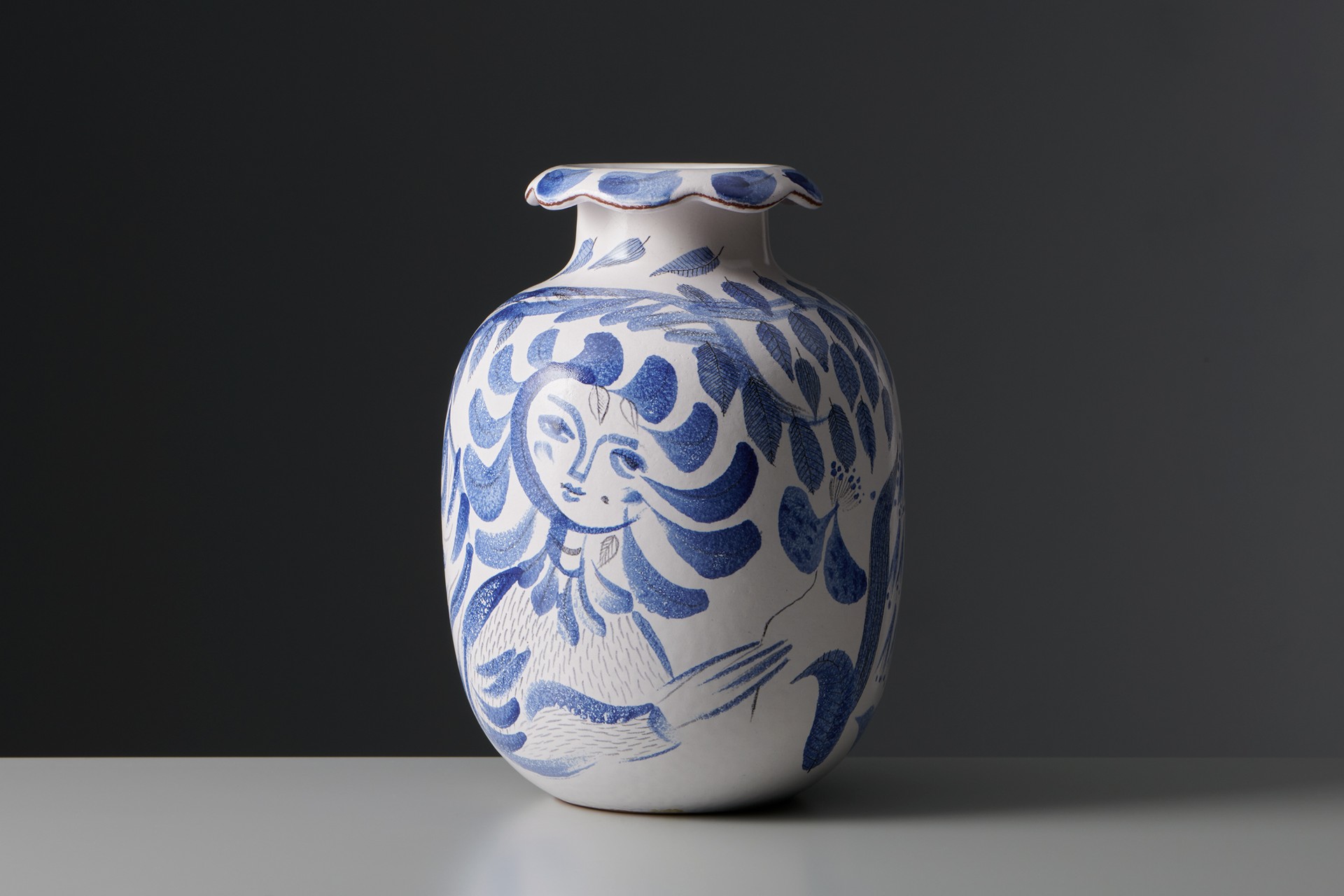
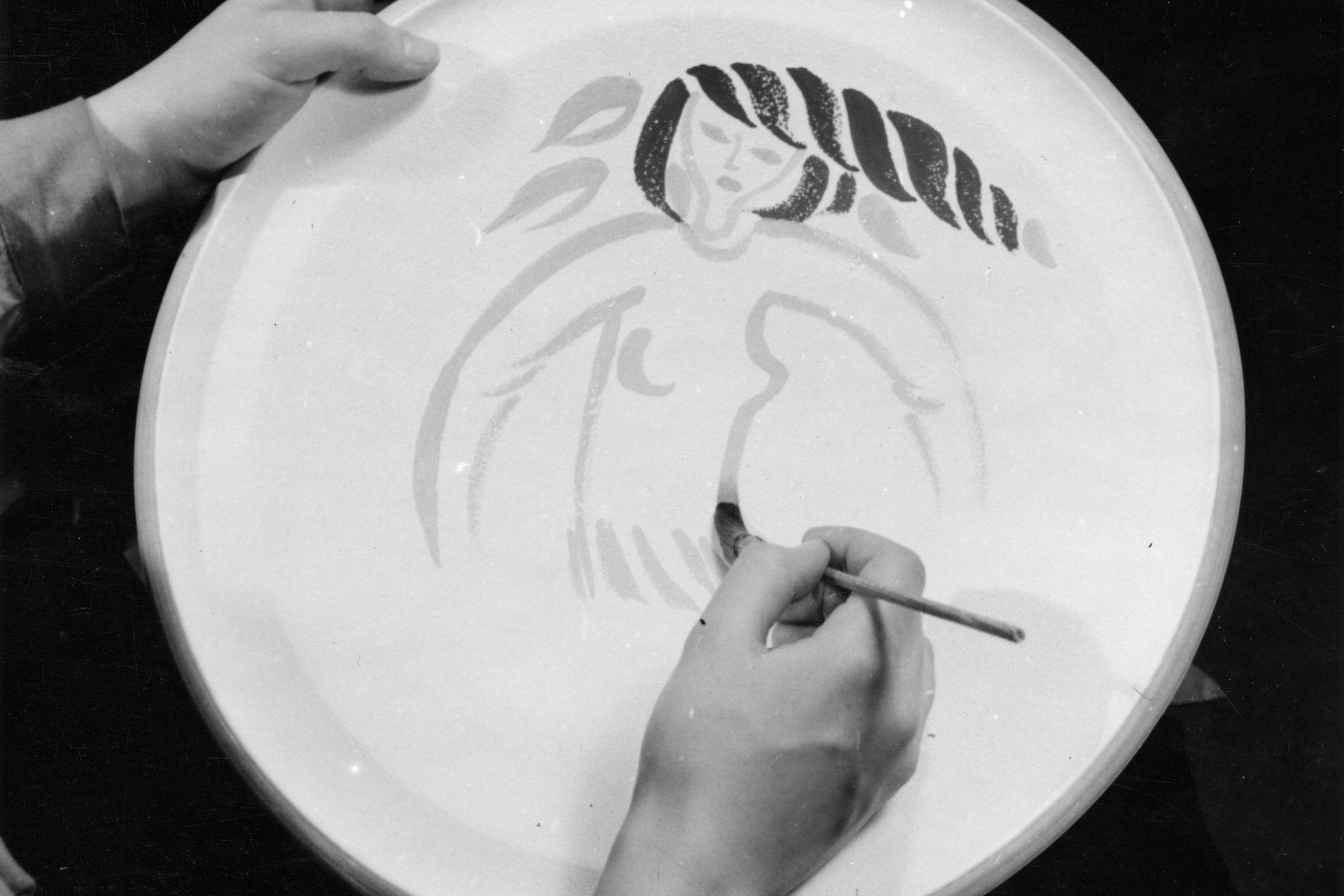
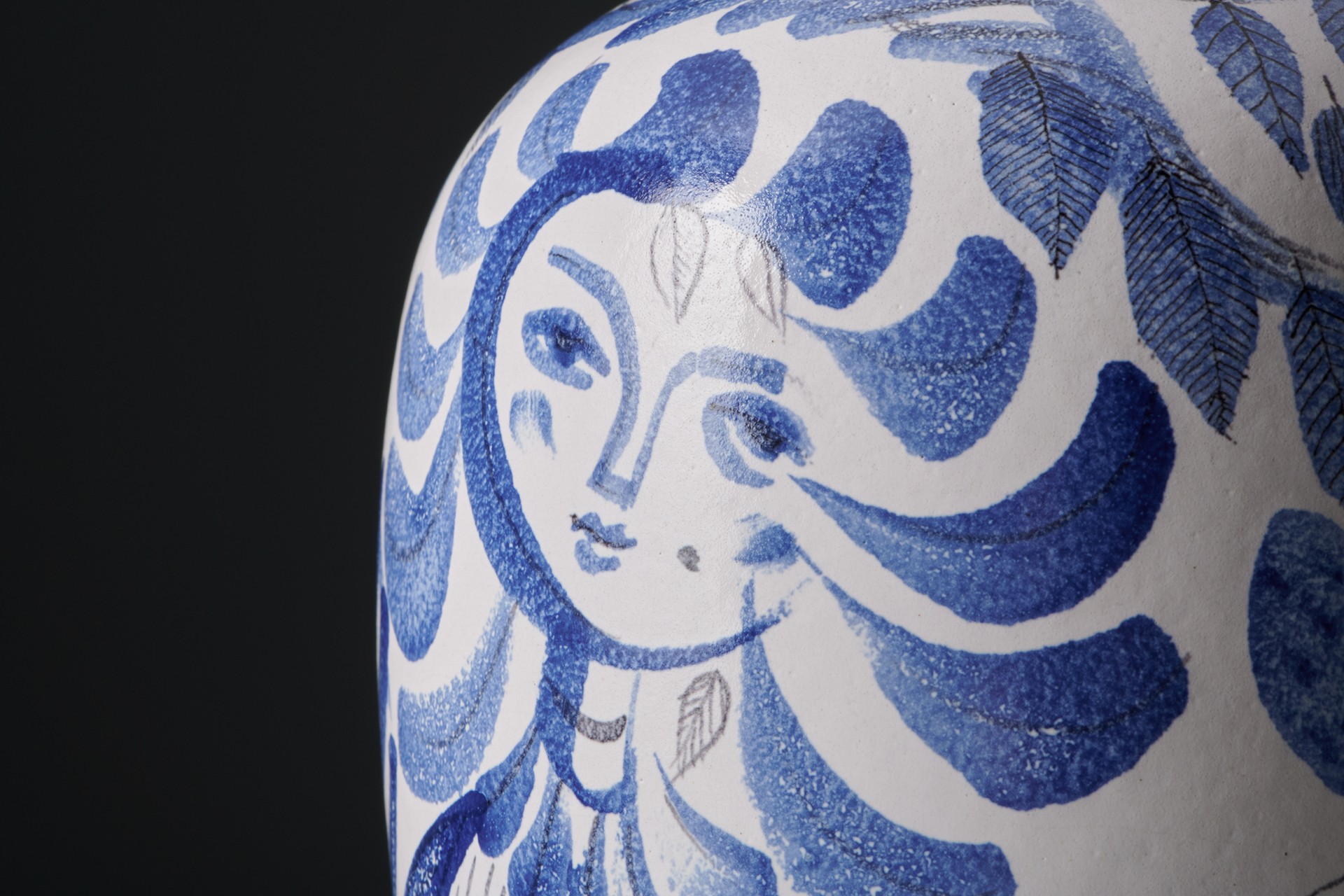
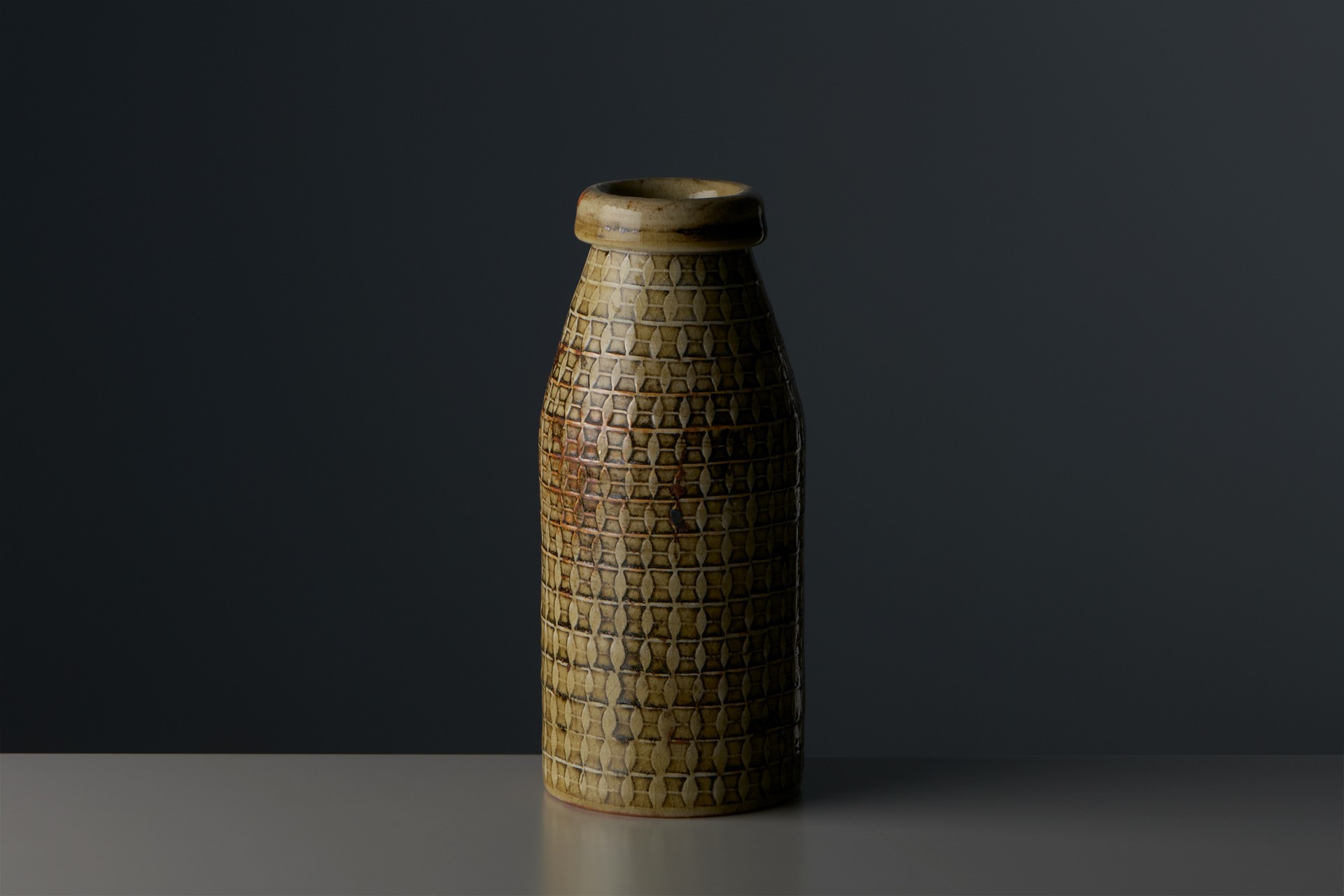
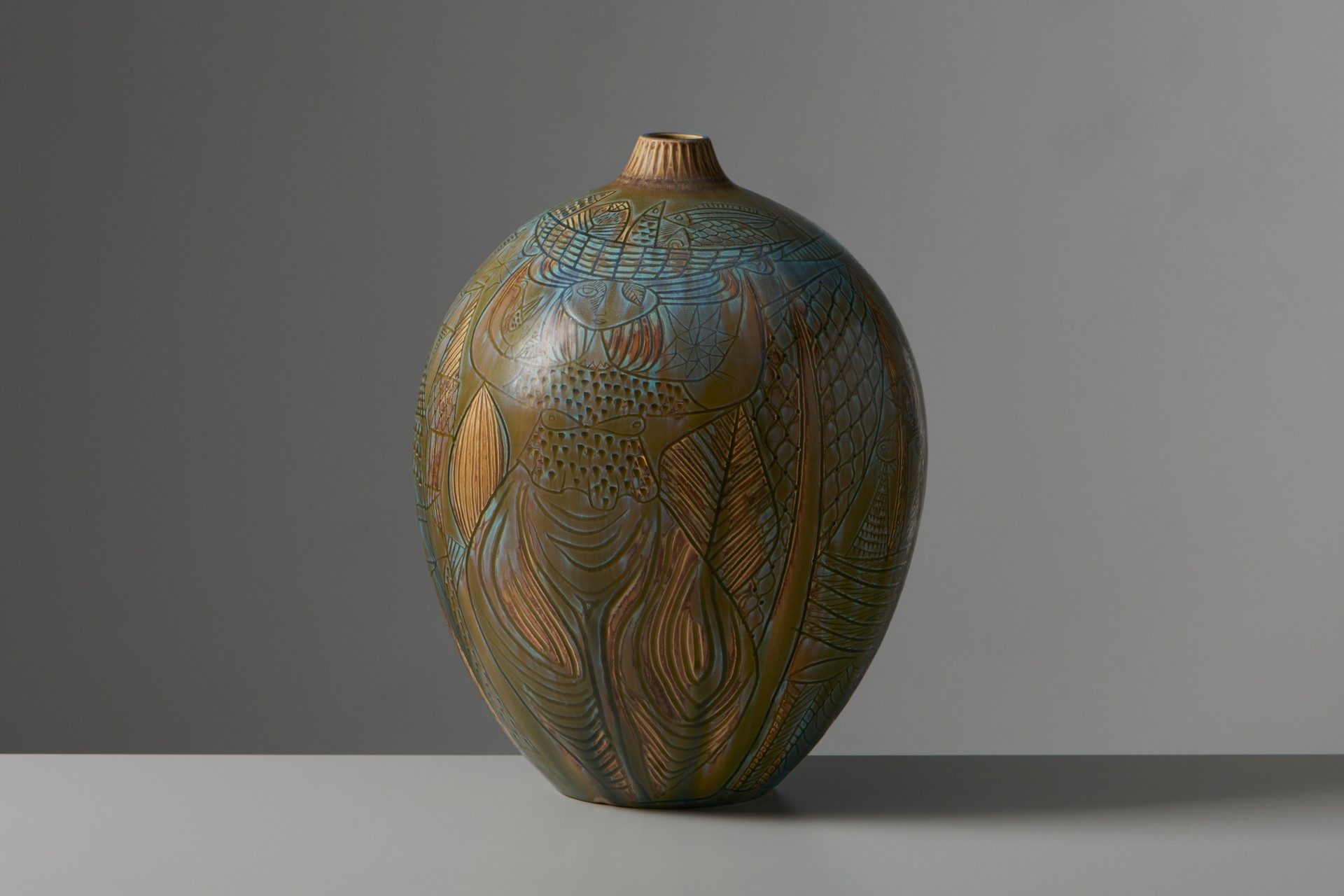
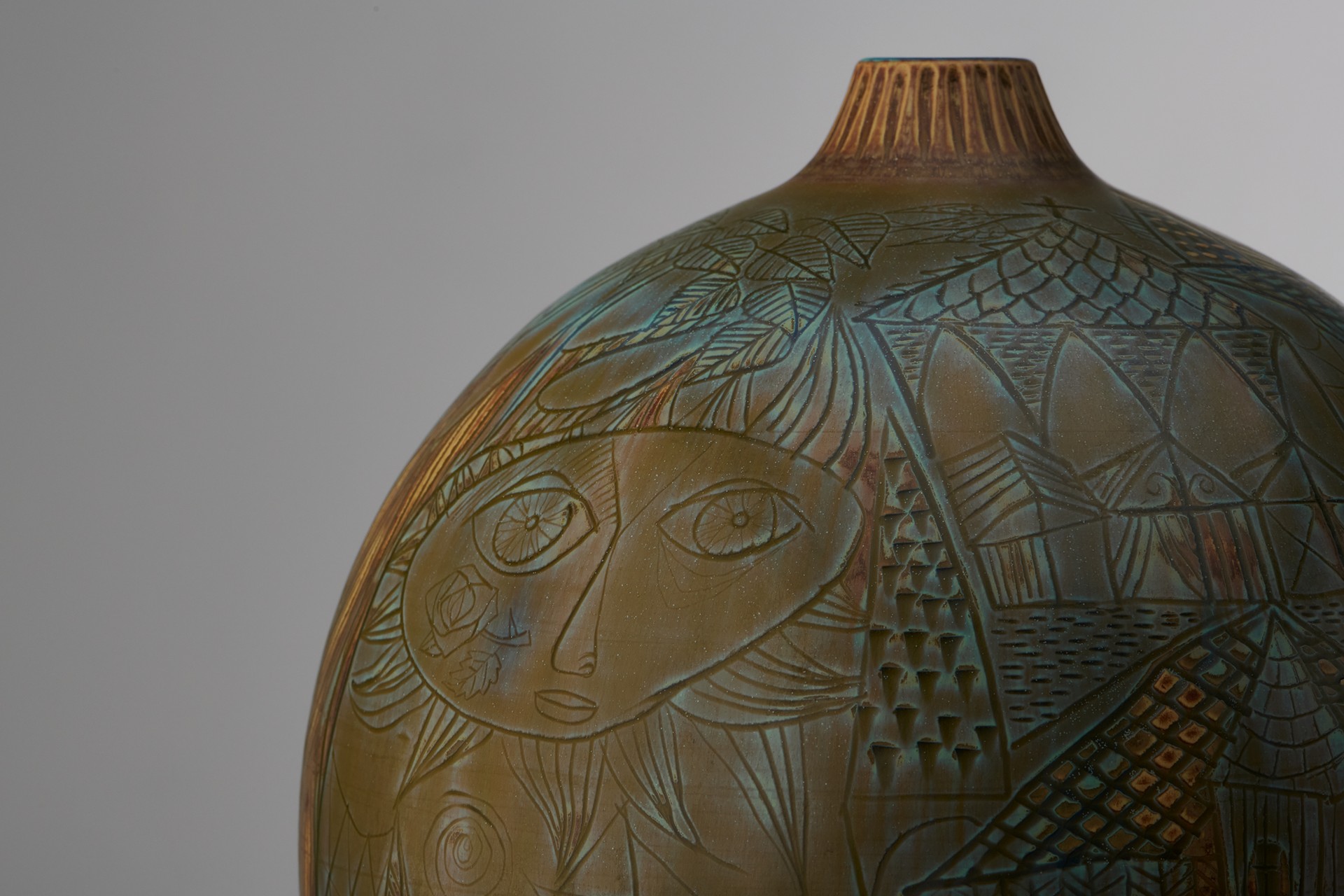
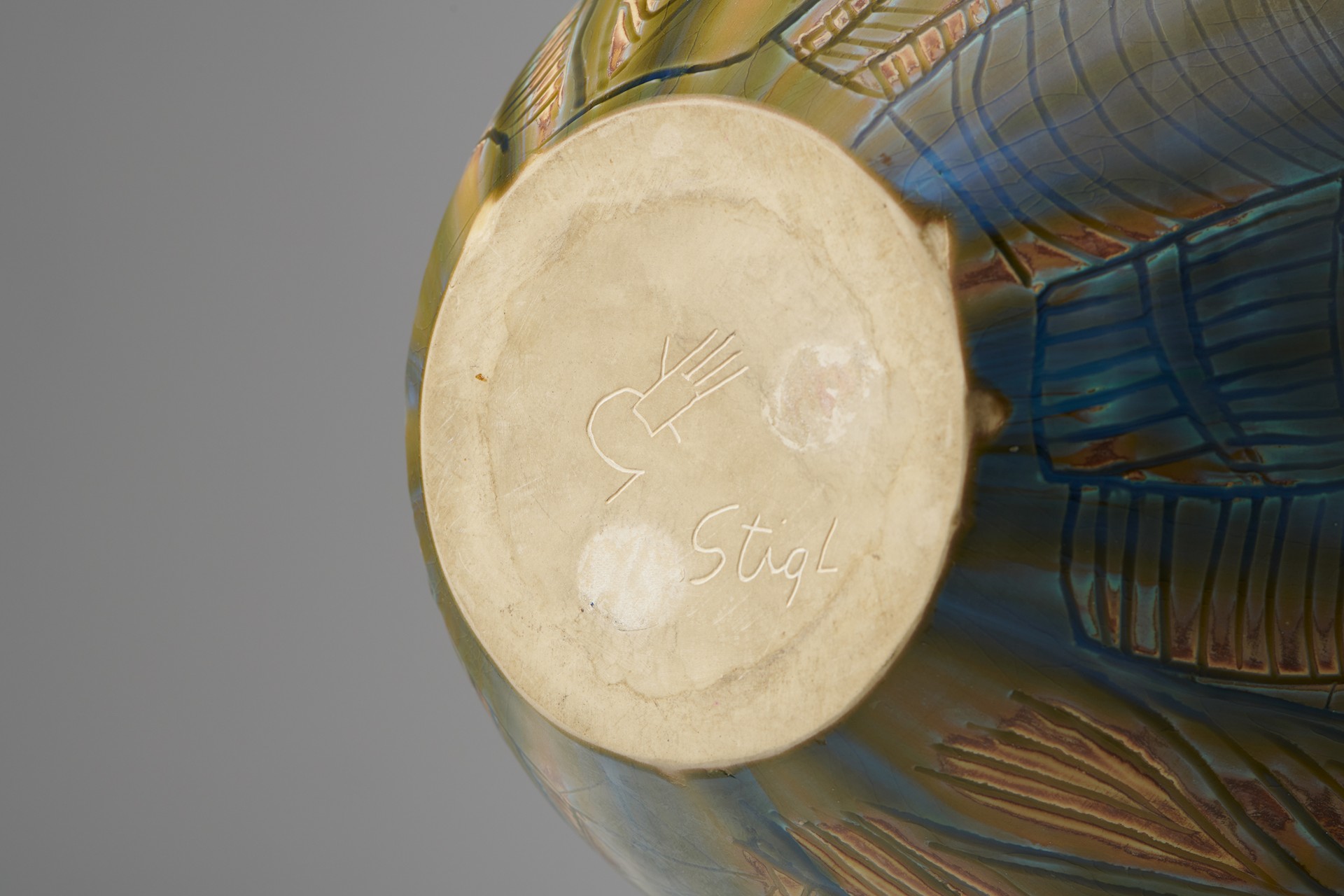
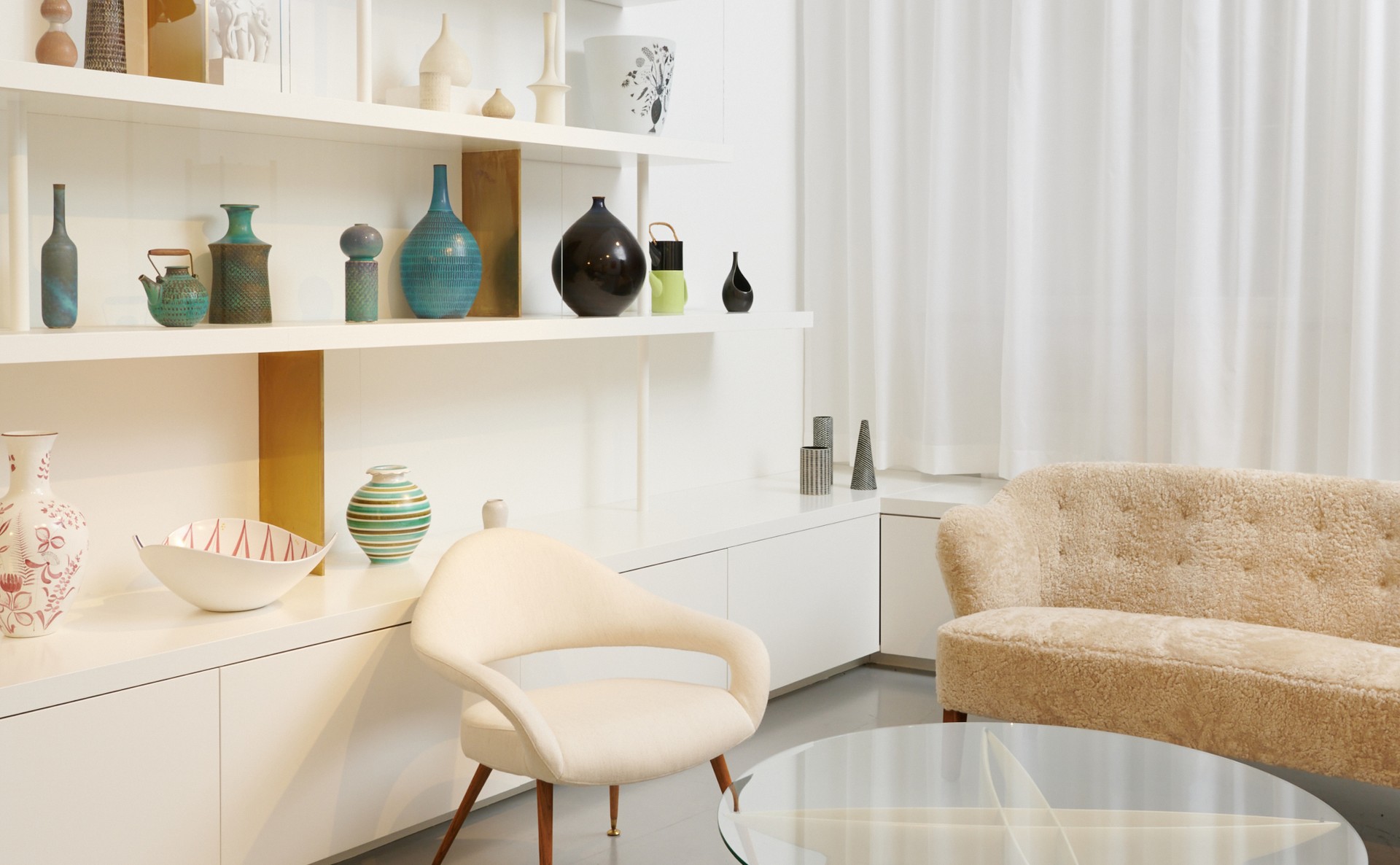
Over the past few months, an exhibition of various works by Stig Lindberg was on show at our gallery at Sibyllegatan 53 in Stockholm. The stories, interactions and acknowledgements with viewers were heartwarming. Stig Lindberg represents a sense of nostalgia for many Swedes, whose childhood was filled with the colourful painted ceramics. It is now, 40 years after his death, that Jackson Design wants to highlight the versatile facets of this multidisciplinary designer.
Just outside the city of Stockholm, on the islands of the archipelago, lies a ceramic factory dating back to the 17th century. It was here, at Gustavsberg, where Stig Lindberg spent most of his career. The Gustavsbergs Studio was founded in the early 1940s on the initiative of Wilhelm Kåge and Stig Lindberg themselves. The studio was intended to give artists a means of free expression, and provide them with the facilities to experiment. The studio was the one that gave Gustavsberg an association with ‘Design’, rather than industrial, ceramic products. It was at Gustavsbergs Studio that several well-known works were created, such as Kåge’s ‘Farsta’ series, or Berndt Friberg’s glazed ceramics. Under a different name, Gustavsbergs Studio continues to form a a source of inspiration, a platform for established artists, and a assembly point for creativity.
While Stig Lindberg focused a lot on smaller works early in his career, later in his working life he began to focus on rather large three-dimensional works. Three commissions in the early 1960s gave him more confidence in this area. After that, he was more involved in these kinds of assignments. One commission included a 38-metre-long and 3-metre-high wall in a hospital in Nacka, Stockholm. For this extremely large work, he used models of different entities and the sand casting technique devised by Anders Bruno Liljefors at Gustavsbergs.
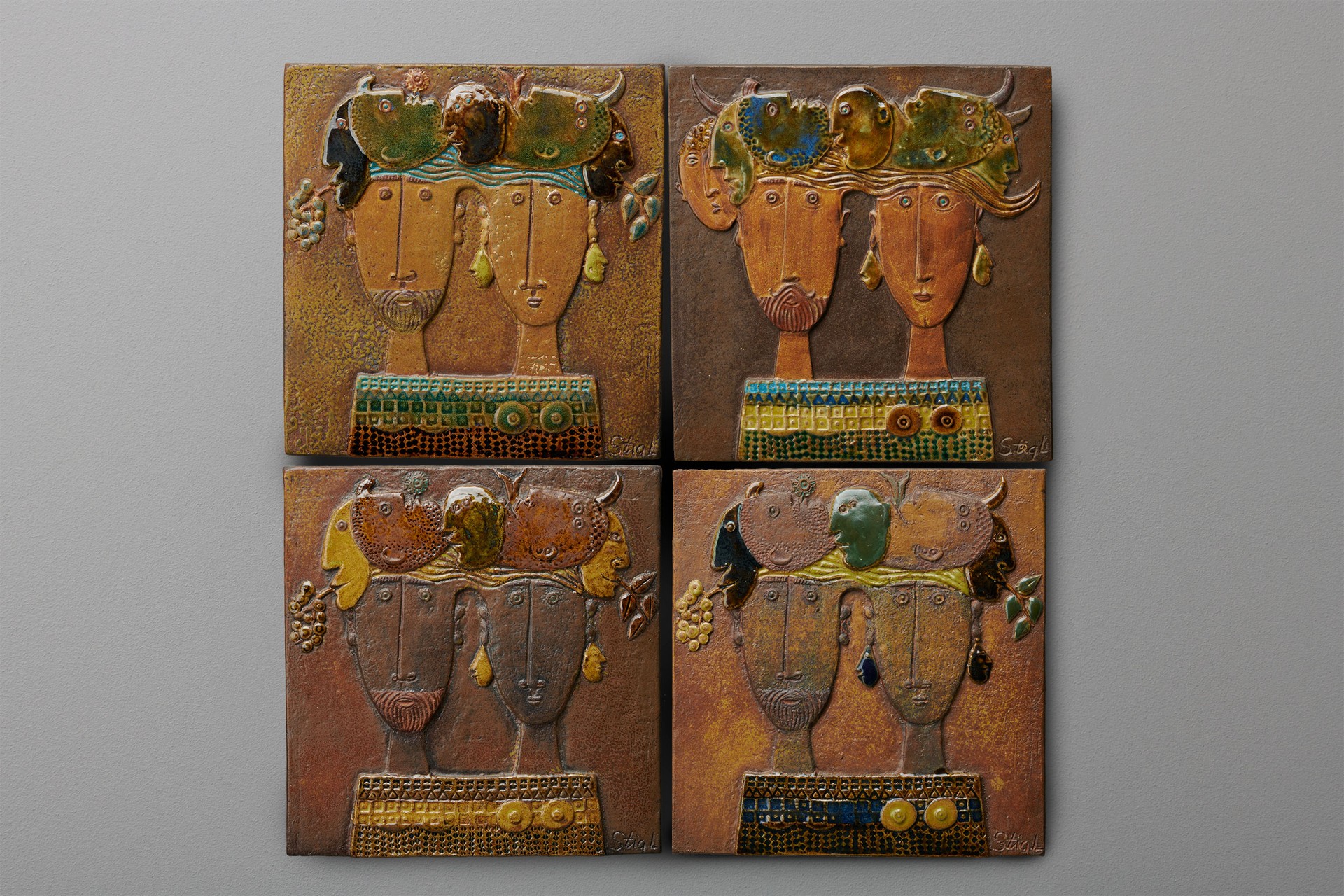
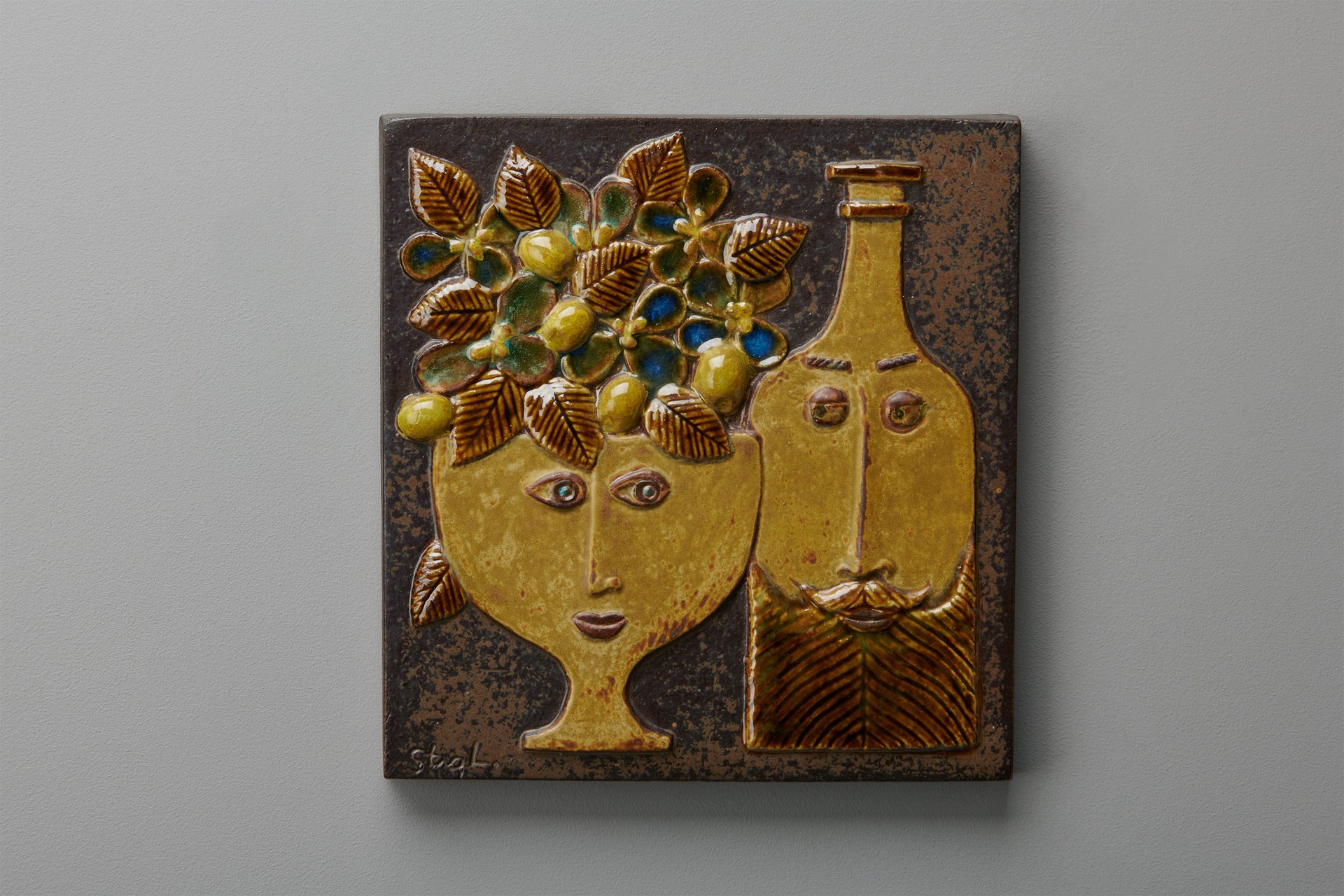
Smaller ceramic walls and tiles were also made, which could be used in domestic rooms. They often contained illustrative figures, repeated in different shades, colours and glazes. Recognisable is the playful style he develops, which can be derived from the children’s book illustrations he made during the same period.
Unlike Gustavsbergs Studio, which focused on artistic expression, Gustavsbergs Fabriker was known for its industrial design. Here, the possibilities of new design were limited by the very narrow tolerances allowed by the standard, which required a different kind of creativity. His curious attitude, which embraced an inventive approach, made Stig Lindberg a successful designer in a variety of materials and products.
The intersection between the industrial Gustavsberg Keramiker and the artistic Gustavsberg Studio was abundantly clear when Lindberg developed his enamel technique. While working with bathtub enamel, he happened to see a colour sample, a piece of sheet metal that had floated in and out of the kiln. It struck him that it was possible to work artistically with the material. At the 1951 Milan Triennial, he showed modern enamel painting in an international context for the first time.
Besides his ceramic works for Gustavsberg, Stig Lindberg also did many commissions beyond. Many know Lindberg for his graphic works. The children’s book illustrations mentioned earlier are a good example; but he also created successful advertising, catalogues, leaflets, wrapping paper and posters.
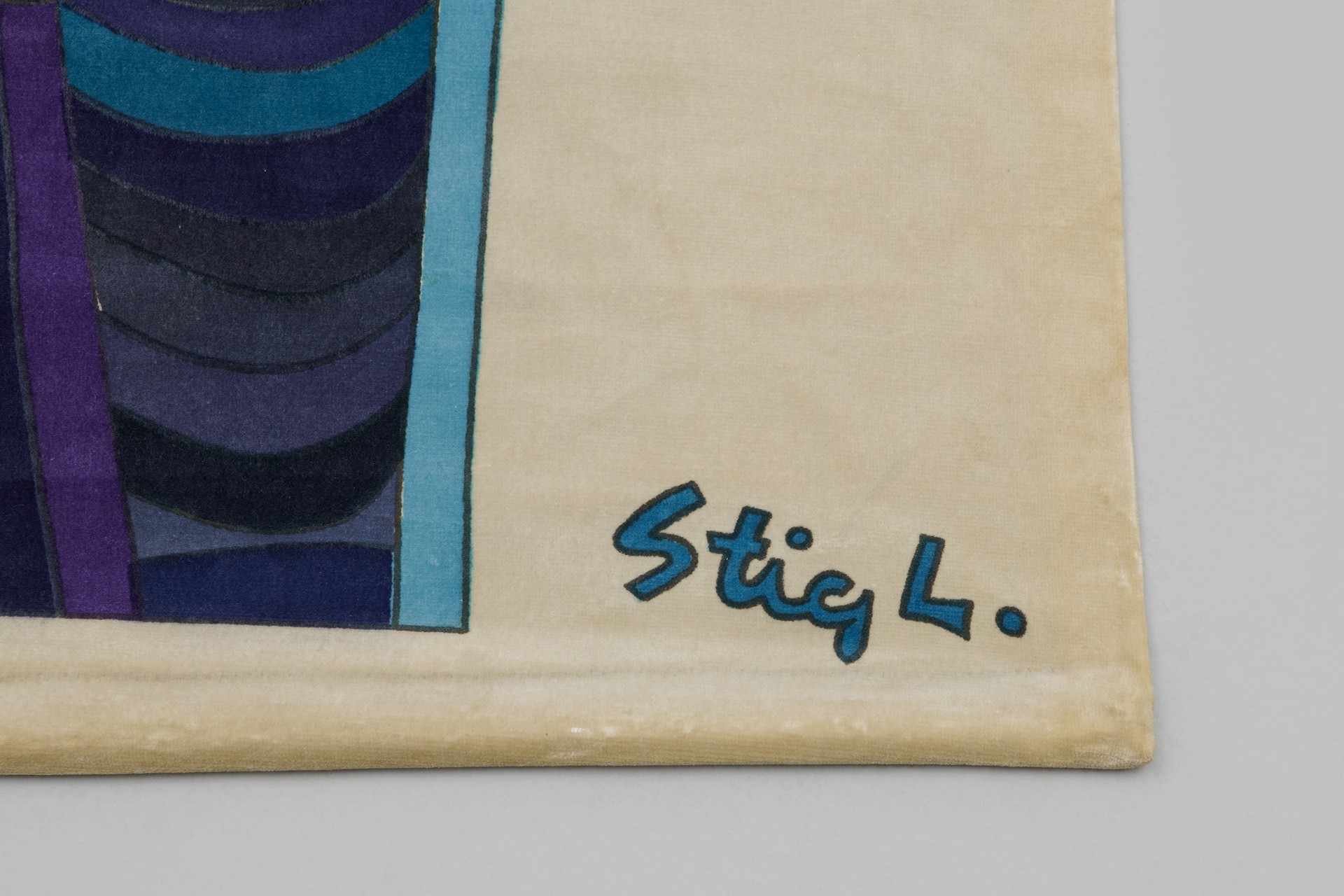
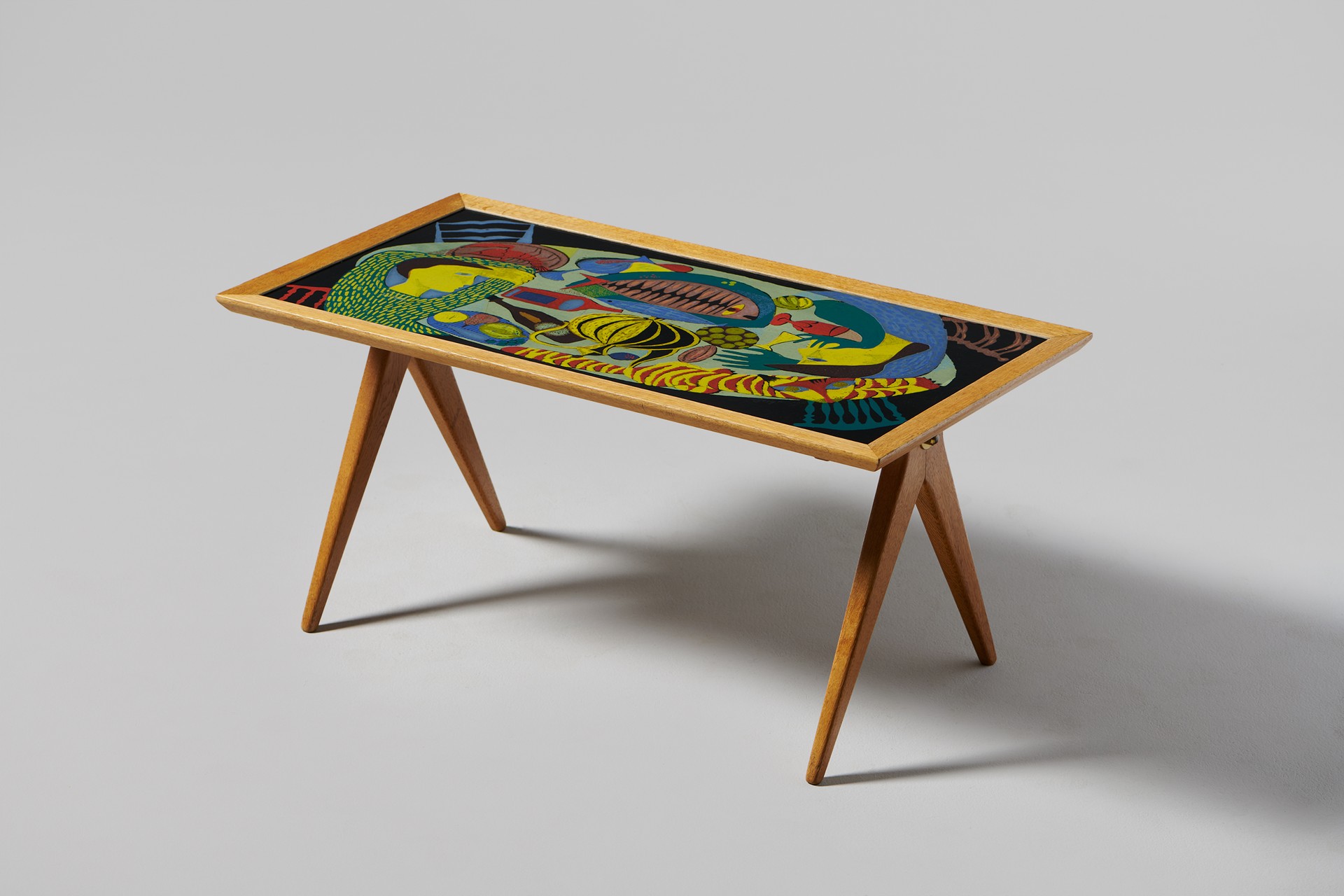
In 1947, he began a series of designs for the textile studio of Nordiska Kompaniet, a department store in Stockholm, which are among the very best hand-painted textile designs of the period. Soon after, he also developed some table designs in collaboration with NK’s furniture workshop in Nyköping. The tabletops were enamelled with his illustrative figures. The enamel offered a colour palette of up to seven thousand shades after 5-6 minutes of firing in an oven. Table bases were available in different designs, by different designers.